Bukhansan National Park: trails and how to hike it
What Bukhansan National Park is
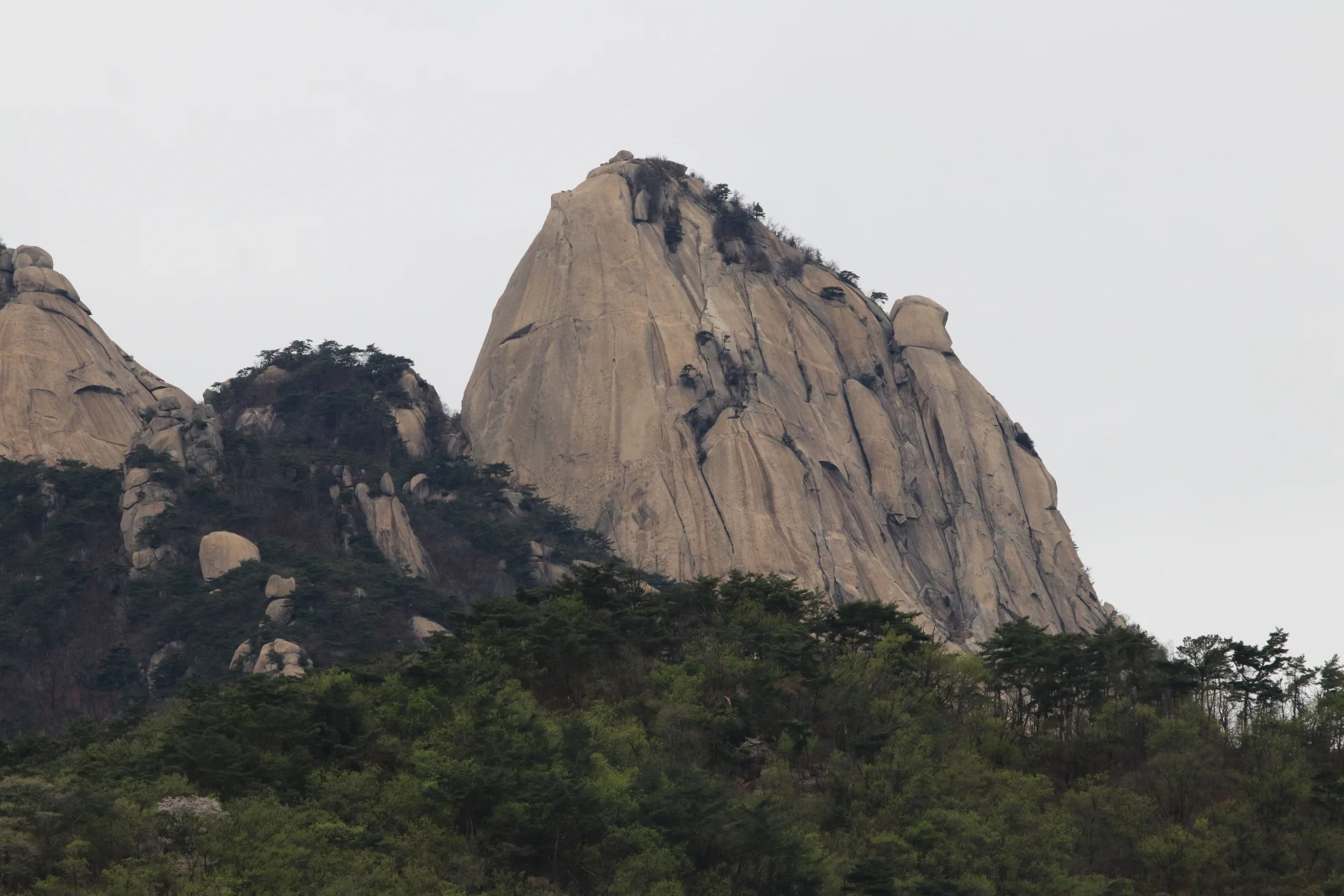
Three granite peaks crown the main range. Baegundae is the highest at about 836 metres. Insubong, a bare dome favoured by rock climbers, comes next, then Mangyeongdae. Together they gave the mountain its old name, Samgaksan, or "three-horned mountain".
Below the peaks you'll find pine forest, rocky valleys with streams, Buddhist temples and the walls of Bukhansanseong, a mountain fortress from the Joseon era. Rocky trails run up from the city on every side, and several start a short bus ride from a subway station.
Entry is free. The park is open every day, from 4am to 4pm from December to February and from 4am to 5pm from March to November. Visit Seoul's Bukhansan page lists the current hours.
Bukhansan trails: which one to choose
Gugi-dong valley to Seunggasa Temple: easy
The Gugi-dong course climbs from the southwest side of the mountain, in Jongno, along a mountain stream to Seunggasa, an old Buddhist temple on the slope. It's rated easy and suits beginners. Allow two to four hours of walking, depending on your pace and how far up you go.
This is the trail our guided hike uses. On the way, it passes a rock linked to the January 1968 raid, when North Korean commandos tried to reach the presidential residence and were stopped in these hills.
Baegundae from Ui-dong: the quickest way to the top
The shortest route to the summit starts on the northeast side, near Doseonsa Temple. From the Baegundae Visitor Center, it's about 4.1km to the top, and the climb takes around 130 minutes. The path passes Harujae, the Baegun Shelter and Baegunbongammun, an old stone gate in the fortress wall.
The last 20 minutes or so are a rock scramble on bare granite, using footholds and steel railings. It's rated advanced. People who don't like heights often find the way down harder than the way up.
Baegundae loop from Bukhansanseong: the classic
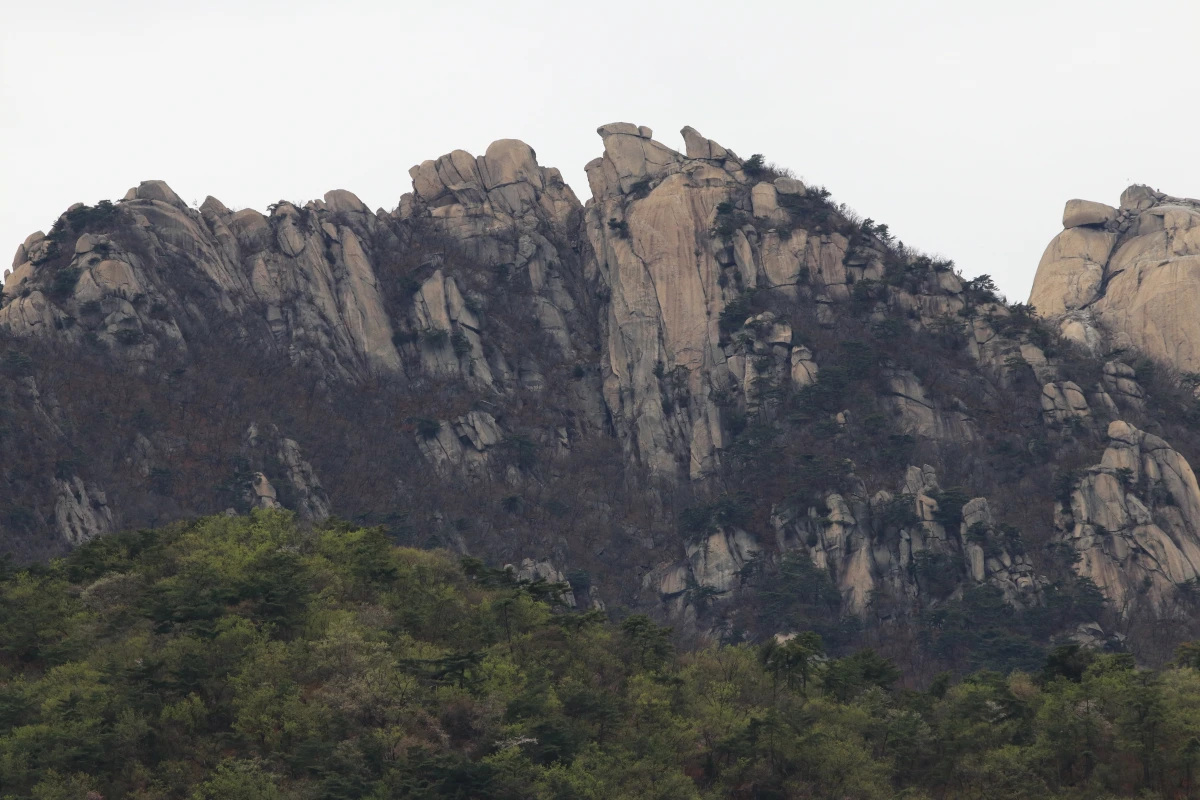
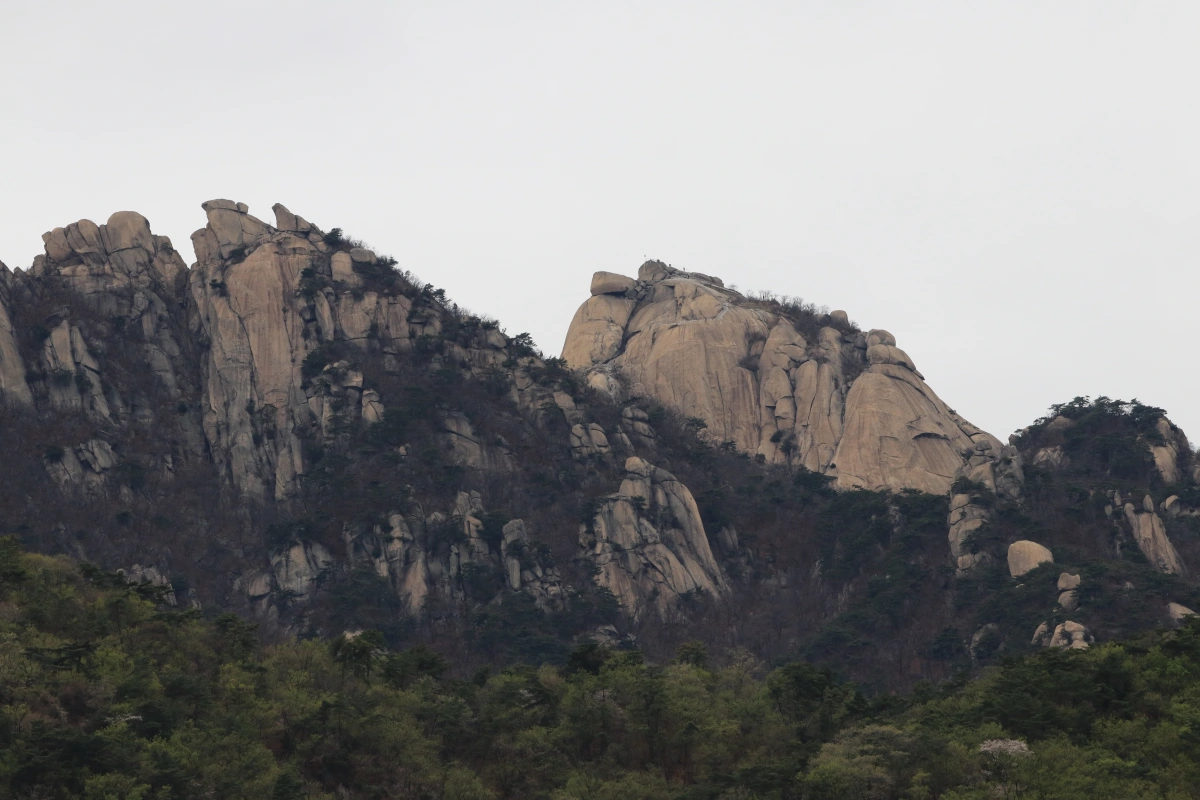
From the western side, the Baegundae loop starts and ends at the Bukhansanseong Information Center. It climbs past Deungungak Pavilion to the summit, then comes down by Yongammun Gate and Jungheungsa Temple. It's about 9km and takes around five hours. The trail is steep, though there are rest areas along the way.
At the time of writing, VisitKorea's Baegundae trail page noted that some sections between Daedongsa Temple and Yongammun Gate were closed because of the risk of falling rock. Check which sections are open before you set off.
Sinseondae on Dobongsan: a quieter summit
In the park's Dobong section, the Sinseondae trail is a 7.2km loop of about four and a half hours. It starts at the Dobong Ranger Station and climbs the Darangneungseon ridge through a rocky gully called Y Valley to Sinseondae peak. Then it comes back down past Madangbawi Rock. The descent is much gentler than the climb. At Y Valley, follow the directions shown on the map there for your safety.
Insubong: climbers only
Insubong looks tempting from below, but you can't walk up it. It's a technical climb that needs full climbing gear and registration in advance. Baegundae is the only one of the high peaks a hiker can reach without equipment.
Longer walks around the mountain
If you'd rather stay low, the Bukhansan Dulle-gil is a walking trail of about 70km that circles the foot of Bukhansan and Dobongsan, split into 21 sections. Most are gentle forest and village paths that you can walk one at a time. Section 21, Uiryeong-gil, is the exception: a 6.8km unpaved road over the mountain between Ui-dong and Yangju, opened to walkers in 2009.
How long the Bukhansan hike takes, and how hard it is
- Easy: Gugi-dong valley to Seunggasa, two to four hours of walking.
- Hard but short: Baegundae from Ui-dong, about 130 minutes up from the visitor centre, with a rock scramble near the top.
- Hard and long: the Baegundae loop from Bukhansanseong, about 9km and five hours.
- Moderate to hard: Sinseondae on Dobongsan, 7.2km and about four and a half hours.
Every route to a summit is steep, with rocky steps and bare granite. Anyone with normal fitness can manage the valley trails. For Baegundae, you'll want to be comfortable on rock and fit enough for a few hours of steady climbing. Add an hour or more for getting there and back from central Seoul.
How to get to Bukhansan National Park from Seoul
- Bukhansanseong, for the Baegundae loop: take Line 3 to Gupabal Station, leave by Exit 2 and catch bus 704, which also runs from the Seoul Station Bus Transfer Center. Get off at the Bukhansanseong entrance stop, then walk about 700 metres up the road to the information centre.
- Ui-dong, for the quickest climb to Baegundae: take the Ui-Sinseol Line to Bukhansan Ui Station. Exit 2 is about five minutes' walk from the Seoul Hiking Tourism Center.
- Dobongsan, for Sinseondae: take Line 1 to Dobongsan Station, then walk about 20 minutes to the trail entrance.
- Jeongneung, on the southern side: from Gwanghwamun Station on Line 5, Exit 2, take bus 1020 to the Bukhansan National Park Entrance stop.
Naver Map and KakaoMap both work in English. Google Maps navigation doesn't work in Korea, so download one of them before you go.
Seoul Hiking Tourism Center: gear, maps and help
That makes it a good start if you've arrived in Seoul without boots. Opening days and hours change, so check the Seoul hiking page on Visit Seoul before you go. The centre also has branches at Bugaksan and Gwanaksan, two smaller mountains inside the city.
On some trails, QR codes on the signposts open a chatbot that explains each section, shows where you are and warns you before a dangerous stretch.
Hiking Bukhansan with a guide
A driving guide picks you up from your hotel in an air-conditioned car, and a mountain expert walks the trail with you. The hike follows the easy Gugi-dong course past Seunggasa Temple, and you walk for two to four hours at your own pace. The guiding is in English, and the tour is private, so it's just your group.
After the walk, you sit down to a traditional Korean lunch, then soak in a Korean-style sauna. Bottled water is included, and you're driven back to your hotel. The whole day takes about seven hours.
A few things to know before you book:
- You need at least moderate fitness. The hike isn't recommended if you're pregnant or have a spinal injury or heart trouble.
- Children must be over eight and with an adult.
- Wear comfortable clothes and walking shoes.
- Dates run all year, and the booking page shows today's price and availability.
- All sales are final, with no refund if you cancel, including for bad weather, so pick a date you're sure of.
We'd choose it for a first visit, especially in the cooler months, when the sauna after the walk is most welcome.
When to go
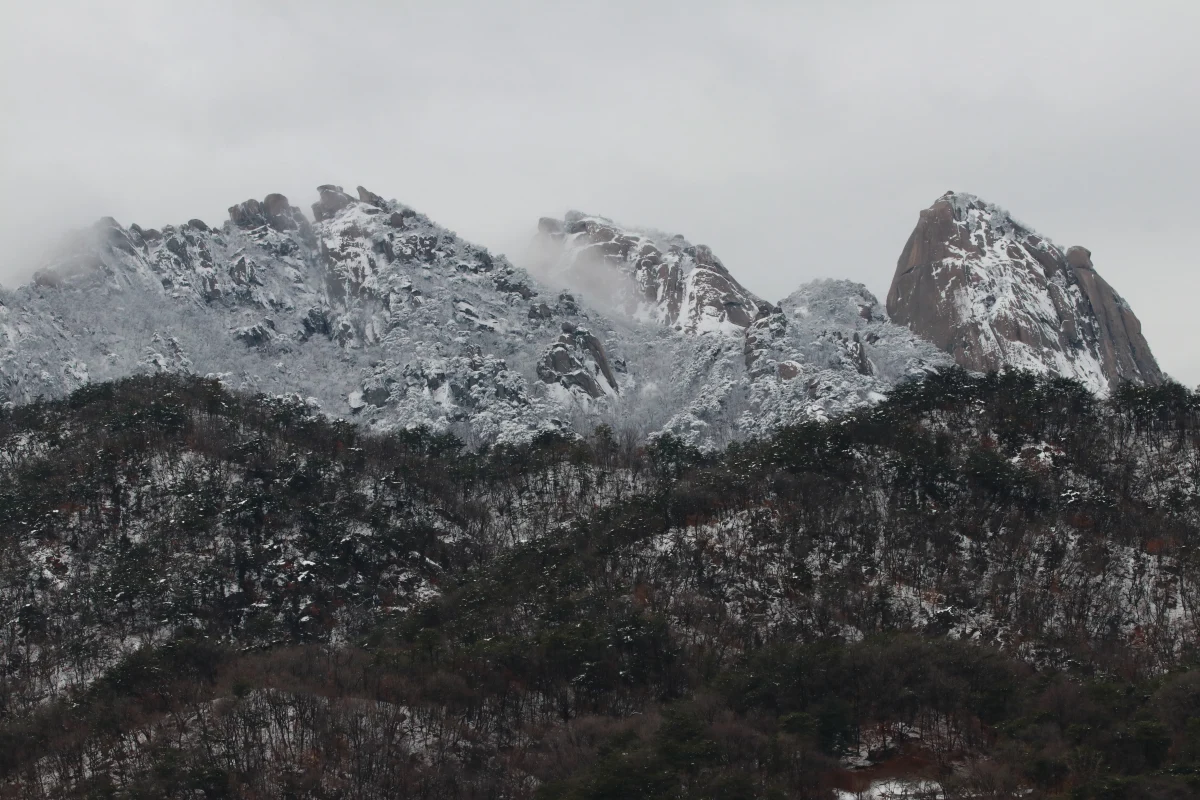
Summer is hot and humid, and the rainy season runs from late June to late July. Wet granite gets slippery, so pick a dry day. Winter often drops below freezing, and the upper trails can be icy, so you'll need crampons for the high routes. The park may also close trails without notice in bad weather.
Good to know
- What to bring: water, snacks, a warm and windproof layer, and gloves for the rock and railings near the top.
- What to wear: hiking boots or trainers with good grip. Smooth soles are dangerous on granite.
- Alcohol: drinking is banned on the peaks and other marked areas of Korea's national parks, and rangers fine people who break the rule.
- Stay on the marked trails, and never pass a closure sign. Sections are usually shut because of falling rock.
- Food: there are restaurants and shops near the main entrances, but very little on the trails, so carry what you need.
- Afterwards: a hot bath is the Korean way to end a hike. Our Seoul itinerary for four days shows how a day on Bukhansan fits around the palaces, the markets and the Han River.
Other hikes in Seoul
For a first hike in Seoul, we'd still pick Bukhansan. It's the most mountain you can reach by subway, and even the easy valley trails feel a long way from the city.
To spend the day on the mountain without the planning, book the private Bukhansan hike with hotel pickup. The page shows today's price and the dates you can book.
Questions
How long does it take to climb Bukhansan?
The quickest route to Baegundae, from Ui-dong, takes about 130 minutes up from the visitor centre. The classic loop from Bukhansanseong is about 9km and takes around five hours. Easy valley trails such as Gugi-dong take two to four hours.
How difficult is the Bukhansan hike?
The routes to the summit are steep and rocky, with a scramble on bare granite and steel railings at the end. They suit fit hikers who are fine with heights. Valley trails like Gugi-dong are rated easy and suit beginners.
How do I get to Bukhansan National Park from Seoul?
Take the subway, then a bus or a short walk. For the Baegundae loop, take Line 3 to Gupabal and bus 704. For the quickest climb, take the Ui-Sinseol Line to Bukhansan Ui. For Dobongsan, take Line 1 to Dobongsan Station.
Is Bukhansan National Park worth visiting?
Yes, if you have a free day and like walking. You get granite peaks, temples and a fortress wall, with views over Seoul, all a subway and bus ride from the centre. Entry is free.
Do you need a guide to hike Bukhansan?
No. The main trails are well marked, and the hiking centre near Bukhansan Ui Station gives advice in English. A guide helps if you're short on time, don't want to work out the buses, or would like lunch and a sauna arranged at the end.
What is the most popular hike in Seoul?
The climb to Baegundae, the top of Bukhansan, is the best known. The route from Ui-dong past Doseonsa Temple is the shortest way up.