Vietnam itinerary: south to north, for one week or two

Which Vietnam itinerary fits your days
Here's how we'd split the time:
- 3 days: one base only. Pick Ho Chi Minh City, Hoi An or Hanoi.
- 5 days: two bases, or the north alone.
- 7 days: Ho Chi Minh City, Hoi An and Hanoi, with one big day trip from each.
- 10 days: the same three bases at a kinder pace, plus a night on Ha Long Bay.
- 14 days: everything below, including Hue and the Mekong Delta.
We start in the south, and you can run any of these plans in reverse if your cheapest ticket lands in Hanoi.
Vietnam itinerary for 3 days
Stay in one place and use day trips. In Ho Chi Minh City, take one day for the city, one for the Cu Chi Tunnels and one for the Mekong Delta. In Hanoi, take two days in the city and one in Ninh Binh. Hoi An also works, with a day in the old town, a day at Ba Na Hills and a morning at the beach.
Vietnam itinerary for 5 days
We'd do two nights in Ho Chi Minh City and three in Hoi An. You get the war history and the city's food first, then the lanterns and the Golden Bridge. If you land in Hanoi, stay there for two nights, give a day to Ninh Binh and spend a night on Ha Long Bay.
Vietnam itinerary for 7 days
Spend Day 1 in Ho Chi Minh City, then go to Cu Chi on the morning of Day 2 and take a late flight to Da Nang. Day 3 is Hoi An, Day 4 is Ba Na Hills, and on Day 5 you fly to Hanoi. Keep Day 6 for Ninh Binh and Day 7 for the Old Quarter before your flight home.
Vietnam itinerary for 10 days
Follow the 14-day plan below and drop Hue. Give Ho Chi Minh City three nights, Hoi An three, then Hanoi two with Ninh Binh, and one night on Ha Long Bay. You lose the Hai Van Pass, which is the part we'd miss most, and you finish four days sooner than the longer plan.
The south: Ho Chi Minh City and the Mekong Delta
Day 1: central Ho Chi Minh City
Fly into Tan Son Nhat airport, about 7km from the centre, and take a taxi or a ride-hailing car. Long Thanh, a new airport east of the city, is due to start commercial flights on 24 December 2026, so check which airport your ticket names.
Stay in District 1 or District 3, where most tours collect you from your hotel. Spend the afternoon on foot around Dong Khoi street, where you'll find the Central Post Office and the Saigon Opera House. Notre Dame Cathedral stands beside the post office, though its long restoration may limit what you can see.

Day 2: the Cu Chi Tunnels and the War Remnants Museum
Go to Cu Chi first, because the morning is cooler. A small-group half-day tour of the Cu Chi Tunnels leaves early and takes about six hours in all, with around two hours at the tunnels. It includes hotel pickup in Districts 1 and 3, an English-speaking guide, your entry ticket, and tapioca and tea.
The tunnels are small and dark even where they've been widened for visitors, but going underground is your choice, and you can see the rest from above. The tour isn't recommended for anyone with poor heart health.
Back in the city, visit the War Remnants Museum, which opens from 7.30am. It's a hard, sad museum, so leave time for a quiet evening afterwards. Ben Thanh Market is a good stop on the way back, and Metro Line 1 starts there if you want to ride it.
Day 3: the Mekong Delta
Get out of the city on a small-group Mekong Delta day trip to Ben Tre. Groups have eight people at most, you're collected between 7.30am and 8am, and the day takes about nine hours.
You board a boat on the river, then stop at a brick kiln, coconut workshops, a fruit orchard and a mat-weaving village. Lunch comes after a ride by bicycle or xe loi, a motorised rickshaw, and a rowing boat takes you along the canals afterwards. Pickup covers selected hotels only, so check yours on the page. It's an easy day for most ages, and we'd choose it over a second day in the city.
Central Vietnam: Hoi An, Ba Na Hills and Hue
Day 4: fly to Da Nang, drive to Hoi An
The flight from Ho Chi Minh City to Da Nang takes between one and 1.5 hours, and Hoi An is under an hour from the airport by car. Da Nang's boundaries grew in July 2025 to take in Hoi An, so you may see Da Nang in a hotel's address.
Reach Hoi An by late afternoon. Thousands of lanterns light the old town in the evening, and that first walk along the river is the best part of the day. On the 14th day of each lunar month, the town switches off its electric lights for the full moon festival, so it's worth checking the date.
Day 5: Hoi An old town and the beach
Walk the old town in the morning, when it's quieter. You buy a ticket once and the heritage office says it lasts your whole stay, up to three days. It covers the streets, the Japanese Covered Bridge or Quan Cong Temple, and other monuments you choose, so keep the stub.
Hoi An is also the place to have clothes made. Order on your first full day, so there's time for a fitting before you leave. Spend the hot afternoon at An Bang Beach, a short ride from town.
Day 6: Ba Na Hills and the Golden Bridge
Give a full day to the small-group Ba Na Hills and Golden Bridge tour. It collects you between 7.30am and 8am in Hoi An, or between 8.30am and 9am in Da Nang, and it takes about eight hours. The return cable car is included, and you can book it with or without the buffet lunch.
At the top, about 1,400m up, you walk the Golden Bridge, held up by two giant hands made to look like old stone. The flower gardens and the French-style village follow. The wax museum and the wine cellar cost extra. Go on a clear day if you can, and take a light layer for the cooler air. It isn't recommended if you're pregnant, or have a spinal injury or poor heart health.
Day 7: over the Hai Van Pass to Hue
Hire a car and driver from Hoi An to Hue, and stop at the Marble Mountains, five hills full of caves and pagodas. Then climb the Hai Van Pass, the road above the sea between Da Nang and Hue. If you'd rather not go by road, the train from Da Nang takes about 2.5 hours and follows the same stretch of coast.
Day 8: Hue
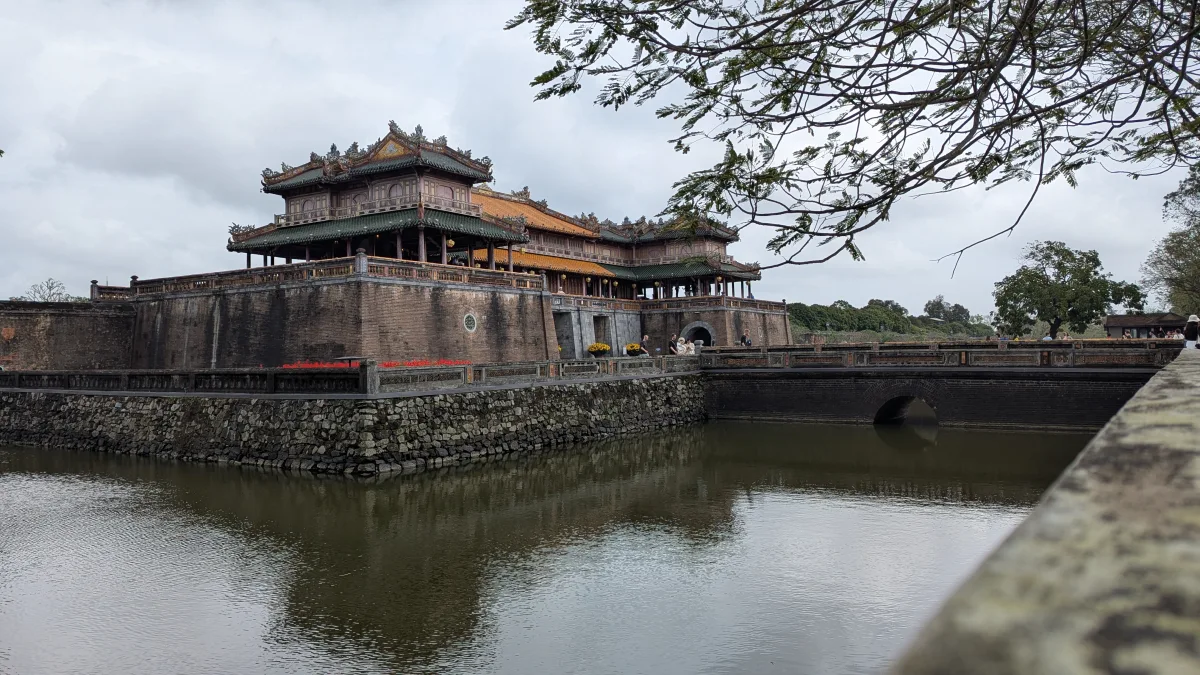
Spend the morning in the Imperial City, the walled palace of the Nguyen emperors, who ruled for 143 years. In the afternoon, visit one or two royal tombs (Tu Duc, Minh Mang and Khai Dinh are the main three) and Thien Mu Pagoda, with its seven-storey tower.
The north: Hanoi, Ninh Binh and Ha Long Bay
Day 9: fly to Hanoi
The flight from Hue takes a little over an hour, and Phu Bai airport is about 15km from the city. The overnight train takes around 13 hours, which saves a hotel night if you can sleep on trains.
Stay in the Old Quarter, because tour pickups are easiest here. Its 36 old streets were each linked to a trade, and they're best on foot in the evening. Be careful crossing the road, and walk steadily so the motorbikes can steer around you.
Day 10: Hanoi
Start at the Ho Chi Minh Mausoleum if it's open. It takes visitors on Tuesday, Wednesday, Thursday, Saturday and Sunday mornings, from 8am between November and March and from 7.30am the rest of the year. It also closes for about two months each year for restoration, on dates that change. In 2026 that was 4 September to 2 November.
Next, walk to the Temple of Literature, which dates to 1070 and is often called Vietnam's first university. Its courtyards are calm even on busy days.

We'd skip Train Street. Hanoi's tourism department has told tour companies to stop running trips there, and the city has agreed to cut the number of trains.
Day 11: Ninh Binh
A guided day tour by boat and bike is the easy way to see Ninh Binh from Hanoi. It's a long day of about 12 hours, with pickup in the Old Quarter between 7am and 7.30am and a return around 7.30pm. If you're staying elsewhere, you meet the group at the Opera House. Contact the operator at least 24 hours before to confirm the exact pickup street.
You see the old capital at Hoa Lu, then cycle through a village if you like and have lunch. After that comes a bamboo boat at Tam Coc for about 1.5 hours, and a climb of almost 500 steps at Mua Cave for the view over the valley.
Lunch and water are included, but entrance fees at the three stops aren't, so read the tour page for what to bring. Cover your knees and shoulders for the temple, and wear good shoes for the steps.
With a spare day, sleep in Ninh Binh and add Trang An. Its boat trips take two to four hours, with bigger mountains and longer caves than Tam Coc. Tam Coc looks its best when the rice turns gold at harvest.
Days 12 and 13: a night on Ha Long Bay
Ha Long Bay is about 2.5 hours from Hanoi by expressway, and cruises leave from Tuan Chau and Bai Chay. One night on board is enough for most people, with a sunset on deck, a cave stop and an early morning among the limestone islands.
Book a cruise that includes the transfer from Hanoi, as it saves a lot of fuss. Storms can stop sailings, mostly from May to November, so read the operator's terms. Lan Ha Bay, known for climbing and deep water soloing around Butterfly Island, is the choice for active travellers.
Day 14: back to Hanoi
Use your last morning for the things you missed, then head to Noi Bai airport. Book a late flight or stay one more night, because a cruise that runs late can't be hurried.
North Vietnam itinerary, with Sapa
- Days 1 and 2: Hanoi.
- Day 3: Ninh Binh, as a day trip or with a night there.
- Days 4 and 5: a night on Ha Long Bay, then back to Hanoi.
- Days 6 and 7: Sapa, leaving on the night train from Hanoi on the evening of Day 5 and coming back by van on Day 7.
The night train to Lao Cai takes about eight hours, then it's roughly an hour by road up to Sapa. Limousine vans from Hanoi take five to six hours. You can visit Cat Cat or Ta Phin without a guide, or book one for an overnight trek through the rice terraces. The cable car up Fansipan, at 3,143m, takes about 15 minutes.

Getting between stops
- Ho Chi Minh City to Da Nang: between one and 1.5 hours.
- Da Nang to Hanoi: about 1.5 hours.
- Hue to Hanoi: a little over an hour.
- Ho Chi Minh City to Hanoi: just over two hours, if you need to skip the centre.
Trains are slow but pleasant in short stretches. The whole line from Ho Chi Minh City to Hanoi takes more than a day, so ride only the parts worth seeing:
- Hue to Da Nang: about 2.5 hours, along the Hai Van coast.
- Hanoi to Ninh Binh: a little over two hours.
- Hanoi to Hue: around 13 hours overnight.
- Hanoi to Lao Cai: about eight hours overnight.
Book ahead around holidays, when trains and buses fill up. In the cities, Grab and Xanh SM are the easy way to get around. Book and pay inside the app, as people sometimes pose as drivers for these services.
We'd avoid renting a motorbike unless you're an experienced rider. You need a licence that's valid in Vietnam, including a 1968 international driving permit if you hold a UK licence, plus a helmet and insurance that covers riding.
When to go, and which way round
- South: dry from December to April, with short, heavy showers from May to November.
- Centre: best from February to August. The heaviest rain and typhoons come from September to November, and Hue can stay wet into December.
- North: best from September to November and again in spring. December to March can be properly cold, so pack a warm layer.
Other months still work if you adjust the plan. From June to August, we'd spend more of the trip in the dry centre. In October and November, go south and north and keep Hoi An short, since floods can reach the old town. In December and January, finish in the south so you end somewhere warm.
Plan around Tet, the Lunar New Year, which falls on 6 February 2027 with an official break from 4 to 10 February. Many businesses, restaurants and transport services close for several days, and Hoi An paused its ticket sales in 2026. The days before the holiday are lively, but we wouldn't try to cross the country during it.
Good to know before you go
- Visas: some passports, including the UK, Japan, South Korea, Germany and France, get up to 45 days without a visa. Everyone else can apply for an e-visa of up to 90 days, which takes three to five working days. The official tourism site's visa answers name the government portal to use.
- Passport: the UK government asks for six months' validity from arrival, two blank pages and no damage, so check yours early.
- Vapes: e-cigarettes are banned, and you can't bring them into the country.
- Water: drink bottled or filtered water.
- Money: the currency is the dong. Hotels, larger restaurants and bigger shops in the cities take cards, but carry cash for street food, markets and small places.
- Data: buy a Vietnam eSIM from Travel Insider before you fly, so that you land with maps and ride-hailing working.
- Bags: watch for bag snatching by passing motorbikes, and keep your phone away from the kerb. The UK's travel advice for Vietnam covers scams, storms and road safety in more detail.
- Bookings: the four tours in this plan are all sales final, with no refund for bad weather. Book them for dates you're sure of, and leave a spare day in storm season.
To start planning, book the day that's hardest to replace. For most people that's the Ninh Binh day tour from Hanoi, by boat and bike, which covers Hoa Lu, Tam Coc and the Mua Cave climb in one day. Then fill in the rest of the route around it.
Questions
How many days do I need to visit Vietnam?
Two weeks covers the south, the centre and the north without rushing. Ten days works if you drop Hue, and seven days works if you fly between three bases. With fewer than five days, stay in one region.
Is 7 days long enough in Vietnam?
Yes, as long as you pick three bases and fly between them. Ho Chi Minh City, Hoi An and Hanoi make the best first week. You won't have time for both Ha Long Bay and Ninh Binh, so choose one.
What is a must-see itinerary for Vietnam?
The classic route is Ho Chi Minh City, the Mekong Delta, Hoi An, Hue, Hanoi, Ninh Binh and Ha Long Bay. You can run it in either direction. Add Sapa if you have a few days more and like walking.
How much money do you need for two weeks in Vietnam?
It depends most on your hotels, your domestic flights and whether you take a Ha Long cruise. Street food and city transport cost little, while cruises and internal flights are the big items. Price those first, then see the current price of each tour on its own page.
How many days do you need in North Vietnam?
Five days covers Hanoi, Ninh Binh and a night on Ha Long Bay. Seven days lets you add Sapa. Allow longer for Ha Giang, which takes several days on its own.
Is it safe to go to North Vietnam now?
For ordinary trips, yes. The main risks are road accidents and storms, and flooding is common around Hanoi in the rainy season. Check the forecast before a cruise or a mountain trip from May to November, and follow what local authorities say.